The Tattoo: See it at least once

French motorcycle team, bagpipe bands, in the Tattoo finale

“Plain AWESOME, A-W-E-S-O-M-E PERIOD.”

That was my 11-year-old’s assessment of the Royal Nova Scotia International Tattoo which he saw for the first time on Friday.

“What is it?” he kept asking before we went. “It’s … a show,” I said, inadequately.

It’s hard to describe the Tattoo; if you haven’t seen it, I’ll refer you to its own website, which says it is “the world’s largest indoor show…. featuring over 2,000 world-class Canadian and international military and civilian performers … a fast-paced, two-and-a-half hour family show featuring music, dance, acrobatics, drama and comedy in a number of innovative acts.”

Bands to the rafters and the choir during the finale

Originally modeled on the Edinburgh Tattoo in Scotland, the Nova Scotia Tattoo was first staged in 1979 and featured primarily military acts.

Over the years, many civilian acts have been added, including guest performers from all over the world.

In common with the military marching bands and demonstrations of physical prowess, virtually all the acts involved precision teamwork.

Estonian roller skaters pose for photos after the show

We saw a fabulous precision roller skating team from Estonia, the French Guarde Républicaine motorcycle ballet, a German gym wheel team, and of course, Scottish Highland Dancers from Nova Scotia and from Australia. The latter group mixed the traditional strict forms of Highland Dance with tribal rhythms and modern innovations, which I found intriguing, having grown up partly in Antigonish where many kids took Highland Dance lessons.

The highest level of millisecond exactness was displayed by an all-female New Zealand drill team.

Talentholdet's innovative rope skipping

The loosest group was the Danish gymnastic troupe Talentholdet whose playful exuberance contrasted refreshingly with the strict discipline of the other acts while performing jaw-dropping feats of tumbling.

Even the tightest military bands had their comic routines to keep us entertained.

Musically, it was impressive that the many brass bands, the bagpipe bands, the choir and the soloists, spread across the width of the Metro Centre, could play in ensemble (almost all the time) – another testament to discipline and talent. Quite the sound!

Notably most of the civilian performers were female – dance troupes in particular, and while there were many women in the military bands, you had to look closely to distinguish them in their uniforms.

The show has a strong vein of patriotism and support for the troops, in their current mission of training the Afghan army now that Canada’s combat role has ended. Included in the honours are police, firefighters, emergency medical services and other first responders who “serve and protect”.

Altogether, the Tattoo is a huge community effort supported by many volunteers. The audience contained people from every province in Canada and many from the USA.

It’s a show that just about everyone should experience at least once.

Woodchip heaven – organic material for the garden

A glorious pile of chipped forest!

I just scored a truckload of chipped branches from a road crew trimming the area around the phone and power lines on our road.

They were happy not to have to cart it back to Halifax, where the truck was headed, so I suppose I saved the contractor a bit of money in diesel.

But I feel like the real winner. I was thrilled to get this much steaming organic matter, a nice mix of “browns and greens” (branches and leaves) which avid composters know to be the ingredients of the slow fire in the middle of a compost heap that produces all that nice gardener’s gold that makes gardens grow.

I’m spreading it over future garden beds. First, I covered the sod with overlapping layers of corrugated cardboard (from behind a grocery store) to smother grass and weeds. Under the cardboard are oak leaves that someone was throwing away. (More free organic matter!) The woodchips go on top of the cardboard in a thick layer. Later I’ll add some manure (which I’ll have to pay for).

In a year or two, the beds will be ready for annual vegetables. The soil will be deeper and contain more organic matter, which it sorely needs. I get out of breaking sod, which is the physically hardest part of gardening. The worms will do the work for me.

Spreading woodchips on future garden beds.

The soil here is sandy and poor – not like the rich drumlin soil of the LaHave River Valley nearby. It needs lots of organic material to become productive for gardening.

Fortunately, Nova Scotia is a leader in “waste” management. Even if I had not intercepted this truckload of material which is so valuable to me, it would have been composted, not buried in a landfill.

Brush Walls at Windhorse Farm

Yesterday I went on a tour of Windhorse Farm, a sustainable farming and forestry operation located up the LaHave River from Bridgewater.

Brush wall at Windhorse Farm
Brush wall and fence at Windhorse Farm

I was most curious to see their brush walls. When I first heard about Windhorse’s brush walls last winter, a light went on in my head. Here was the answer to several of my problems, including the strong north wind chilling the garden, and large amounts of brush available.

Windhorse’s brush walls are piles held in place by stakes 6 feet apart, making a thick wall. As the brush gradually breaks down, more is piled on top. Vines such as squashes and grapes are encouraged to climb over the brush, and in summer, the brush walls can be completely hidden by vegetation.

My picture also shows a higher brush fence that has been woven around taller stakes. In fact, it’s about 7-8  feet high, high enough to keep out deer.

The brush walls contribute greatly to the success of Windhorse’s garden. They enclose and shelter it, holding in heat. The decomposing brush adds to the fertility of the soil. And very importantly, the brush walls provide habitat for all sorts of wildlife, including the friendly critters that help control garden pests.

Click here for a description and a rather old low-res video about Windhorse’s brush walls.

I started building a brush wall last spring and will continue to develop it.

Growing Kiwis in Nova Scotia

Kiwi flowers
Flowers on female Actinidia kolomikta

It’s the hardy kiwi, Actinidia kolomikta. The fruits are the size of a large grape, less fuzzy than their New Zealand cousins, and delicious, apparently. I’ve never eaten one or even seen one.

But I hope to soon! I’ve got a boy plant and a girl plant in the backyard, and they seem to like each other….

This kiwi is hardy to Zone 4 (we are in Zone 5b or 6a, warmer than Zone 4) and has a reputation for vigour. In fact, frequent pruning is required to train the vines properly and to help the plant concentrate its energy into growing fruit.

The vines need a sturdy structure to grow on, and it shouldn’t be too tall to reach for pruning, or you’ll lose the battle for fruit development. A strong timberframe trellis would be the ideal thing.

I’m training mine on the 10-ft high trunks of a cherry tree that I cut down last summer. (It was non-productive and besieged by cherry slugs, or sawfly larvae.)

I have a couple of friends in the area who are also excitedly growing hardy kiwi for the first time. One of these years, we’ll have our first taste of the fruit, if we can keep the squirrels and birds away from it.

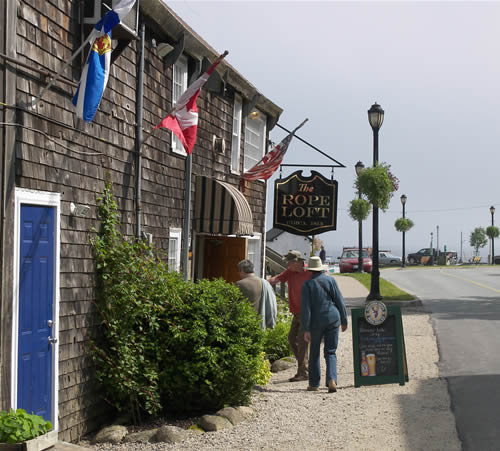
The Rope Loft in Chester: a favourite restaurant

Father’s choice on Father’s Day, so of course we went to the Rope Loft on Chester’s Front Harbour.

Entering the Rope Loft
The Rope Loft in Chester

We didn’t dock and dine this time, but you can do that, and berth your boat for the night too, if you’re lucky.

If the walls could talk, they would have many nautical yarns to tell. The old oak timberframe building dates back to the privateer ship Teazer, as it was built with remnants of the famous ship after she burned and sank in Mahone Bay in 1813.

But there’s no salt pork and hardtack on the menu. The Rope Loft Burger is the best around. One of our fathers was very pleased with his sirloin tip roast with baby potatoes and Yorkshire pudding which, he declared, was almost as good as his own. That’s high praise!  The mothers enjoyed Baked Salmon and Seafood Marinara respectively.

A walk around the Village completed our lovely Father’s Day outing.

When the weather is warm enough, you can sit on the deck and watch the activity on the Front Harbour.

The restaurant is a busy place during Race Week. Last year, the Tanzer 22 class was headquartered at the Rope Loft.

Check out the Rope Loft website for a bit of history and some pictures – and of course the menu!

Public washrooms in Chester!

Chester's new public washrooms

We were delighted to try out Chester’s new public washrooms on our Father’s Day excursion. Our tester approved the facilities, which are next to the Lido Pool on Parade Square, between the public wharf and Chester Yacht Club. They look like they are accessible for wheelchair users too.

Congratulations to the Village of Chester for making life a lot easier for visitors and locals alike.

Mahone Bay Swimming Pool

Mahone Bay Swimming Pool website

Kids in Mahone Bay learn to swim at the Mahone Bay Pool, a gem in the heart of town.

The pool is open in July and August, and welcomes visitors as well as locals.

There are public swim times in the afternoons and evenings.

Mornings are devoted to Red Cross swimming lessons, from beginners to Bronze Medallion and Bronze Cross.

The teachers are mostly young people who have come up through the system. It’s a great summer job.

Classes and public swims are not crowded.

Registration is coming up soon. Find more information on the Mahone Bay Swimming Pool’s new website, created by yours truly.

Doers and Dreamers 2011 is ready

Doers and Dreamers 2011 cover
Doers and Dreamers 2011

Planning a trip to Nova Scotia this year?  Live in Nova Scotia and plan to vacation in another part of the province?

The new Doers and Dreamers, the province’s flagship travel guide, is ready.

So are other guides such as the 2011 Motorcycle Tour Guide, the Halifax Guide, and Taste of Nova Scotia.

Check them out on the provincial tourism site. They’ll send them to you free.

Even if you travel for business, Doers and Dreamers is handy to have.

The end of winter, Annapolis Valley

Annapolis Valley view, March 14
Looking from Lower Canard towards the Canard River and the South Mountain, March 14, 2011

Before the official end of winter yesterday, the snow in the Annapolis Valley and the South Shore had mostly melted. A layer of ice, the remnant of sunny days and cold nights, was the last thing to leave our lawn; it took days to melt.

We enjoyed a March Break trip to the Valley, and waking up to these expansive views.

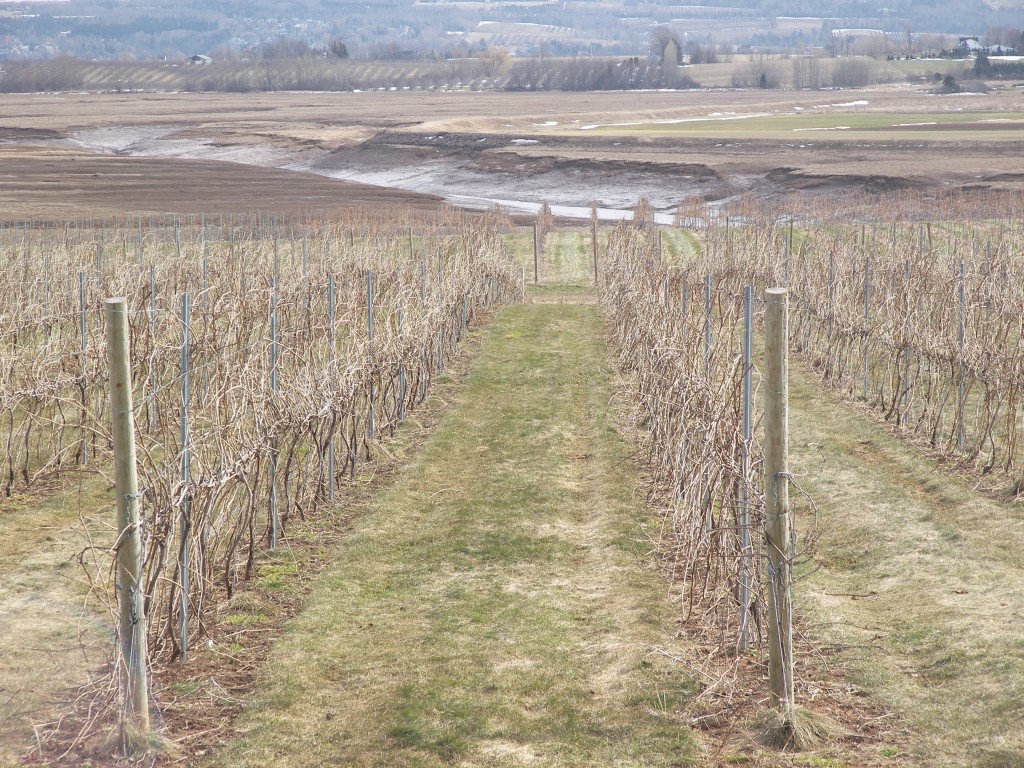
Vinyard in Lower Canard
Vinyard in Lower Canard, March 14, 2011

An impressionist’s view of winter in Martins Point

Late February: the best part of winter. The sun is shining straight through my office window in the semi-basement. How pleasant. Meanwhile, outside, all is white, hard and frozen. Last weekend, a couple of anglers walked about three hundred meters over the frozen sea in front of our house, carrying two chairs, a pack of beer and their fishing rods. They sat there motionless for hours, looking at the hole in the ice they had made for fishing, while drinking beer and having a good chat, I bet. Way to go!

Winter ice at Martins Point